

Part 1:
The heart of Singaporean culture lies not in the high-end downtown and touristy locations; rather, it can be found in the humble, constantly crowded Hawker Centers. These outdoor food courts are arranged in vibrant clusters of affordable food stalls that epitomize the multiculturalism of the country, with everything that Asia can offer, from the famous Hainanese Chicken Rice to the flavorful Thai Pandan Chicken. The stalls themselves are not where the diversity ends. People from all walks of life and backgrounds enjoy what Hawker Centers across the country have to offer together–each one greeting the other with the common phrase “have you eaten yet?”
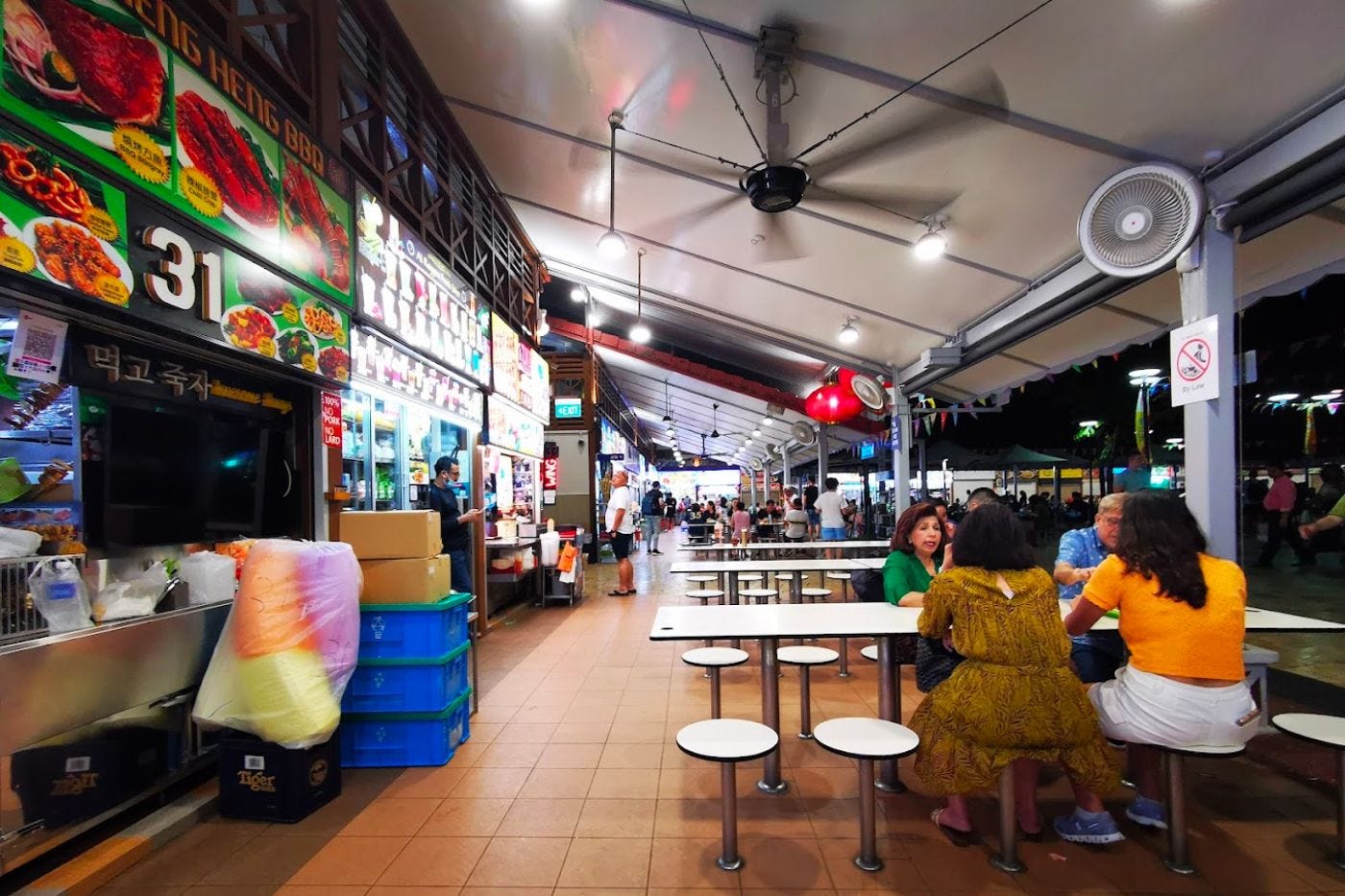
Newton Hawker Center in Singapore. Credit: Newton Center Food
I was born in Singapore but moved to Cincinnati, Ohio quite early in my life. When I moved back at the age of 8, my family and I stayed in the heart of Singapore downtown–Orchard Road. Our service apartment was surrounded by hundreds of restaurants, each fancier than the one before, yet, after each long day of school, I would beg my parents to take me to a nearby Hawker Center. Sometimes they would join me, while others I would venture on my own–$10 SGD in hand, I would always be deep in thought of what I would get to try that day during the walk over. In my eyes, the eyes of a child and avid foodie, the cuisine of Hawker Centers superseded racial and ethnic boundaries and encouraged acceptance. Each expedition to the Hawker Center gave me a taste of new cuisines and an appreciation for the diversity the world has to offer.
My experience at the Hawker Center was only a glimpse of a long history of food bridging cultures. The larger, ongoing story of migration, trade, and globalization traces back many centuries to the Spice Trade in 1000 BCE. For centuries, geography and climate shaped what ended up on people’s plates, however, this trade route surmounted borders and spurred a period of unprecedented cultural intermingling. Since then, whether it has been tomatoes arriving in Italy from Peru or the spread of coffee to all corners of the world, culinary exchanges have defined the very items we consume daily, slowly shaping our daily lives and culture. This exchange of cuisine is not just a culinary curiosity–it’s a chance to break down the boundaries that often divide us. Food’s power to overcome borders has not gone unnoticed.
In 2002, the Economist was the first to report on the ‘Global Thai’ movement from the Thai government intended to stimulate tourism and, perhaps more importantly, “deepen relations with other countries” by bringing hundreds of new Thai restaurants to various countries to all countries. Thus came about the term “gastrodiplomacy”, whereby nations share their cuisine with others in order to earn a spot in the hearts and stomachs of people all over the world. American politicians were the first to note that cuisine is often the only way Americans can get exposure to other countries and cultures. Today, Thai food is high in demand and seemingly everywhere in the U.S., from bustling city centers to sleepy small towns, each dish carrying a taste of Thailand’s spirit. As the cuisine’s influence spreads, the ties between the U.S. and Thailand grow stronger and stronger.
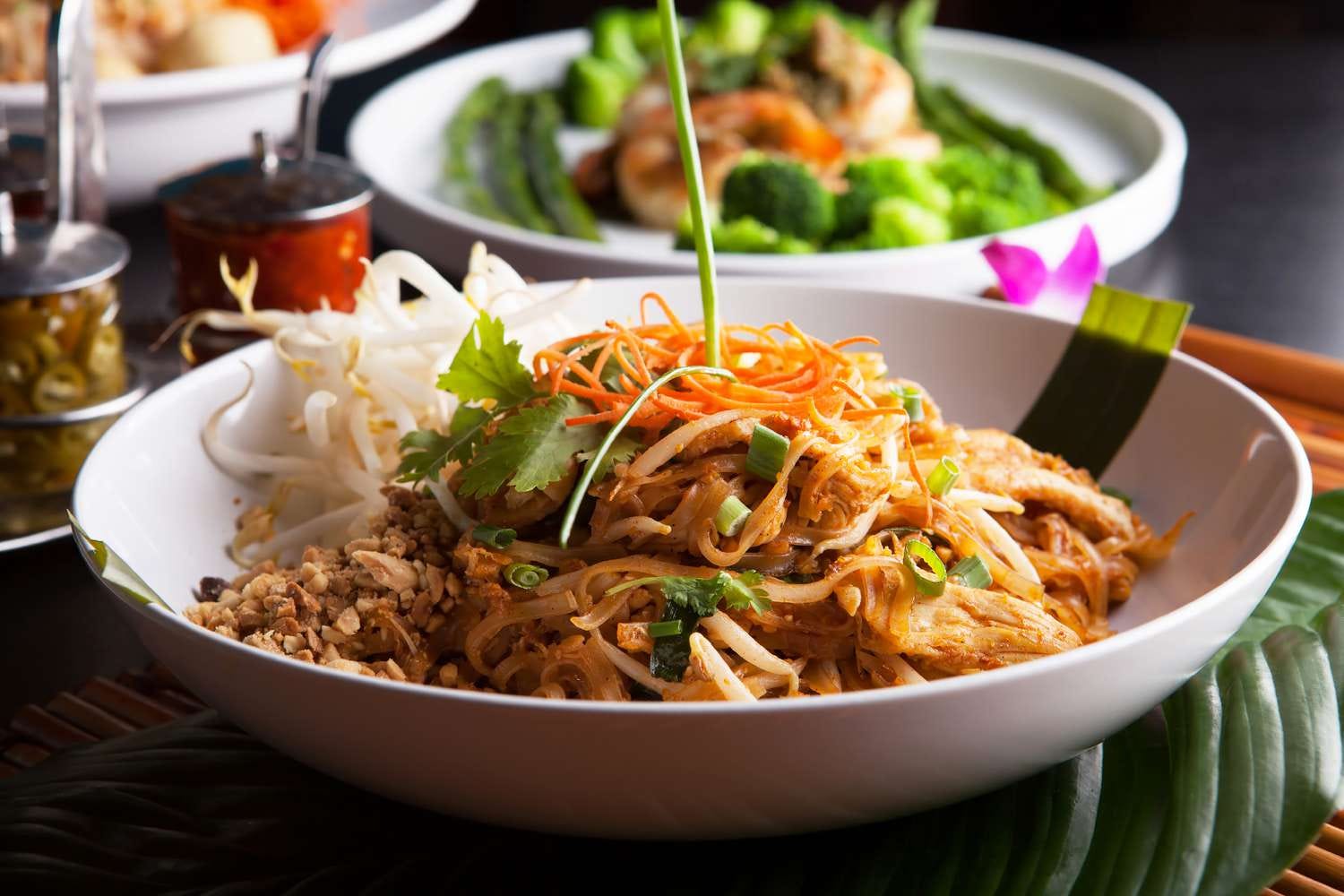
Pictured is Pad Thai, one of Thailand’s most poplarized dishes. Credit: Food & Wine magazine
The U.S.’s multicultural nature lends itself perfectly to gastrodiplomacy, but the effects of introducing international foods to other foods permeate throughout the globe, even reaching the most unexpected of nations, North Korea. 1994-1998 marked the greatest famine the country had ever seen, one that would be known as the Arduous March. The communist regime’s inability to manage its centralized food system resulted in hundreds of thousands of casualties and drove the poorest of the nation into a corner.
From this struggle came the sparks of rebellion in the form of independently-owned black markets containing international food items for cheap prices. Jangmadang, as they would come to be known, came about for the need of survival, however, the defiance against North Korea’s fundamental communist institutions and strict international trade restrictions didn’t stop there. We humans are simple creatures–tasting each other’s food creates a sense of curiosity of each of our unique experiences and heritages. North Koreans also use jangmadang markets to spread rumors and news about countries beyond their borders–countries they had only heard disparaging things about from their government.
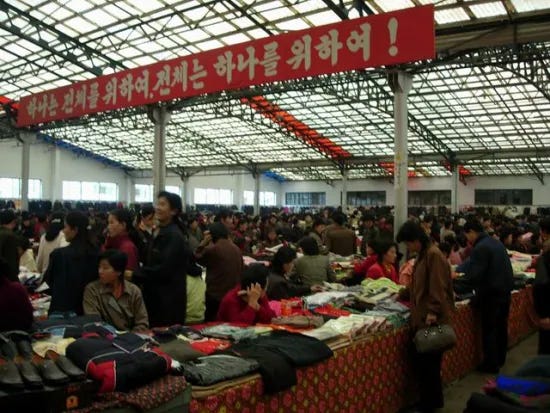
The Jangmadang black markets of North Korea. Credit: Namu Wiki
The elites and leadership of Pyongyang have had a different relationship with foreign cuisine. Despite the food struggles of the poor, the rich of Pyongyang have thrived, and the North Korean government has carefully been curating international cuisines and providing only those elites access to these high-quality restaurants. One for survival, the other for luxury; however, both classes are more curious and accepting of international ways of life now, showing how food can pry open even the tightest shut doors.
As individuals have started to realize the ability of food to unite, more have started to explore other contexts to apply culinary exchanges. In some of the world’s most intense conflicts, cuisine has quietly worked its magic, encouraging understanding where words fall short.
Take, for example, the Israeli-Palestinian conflict, one marked by decades of dispute. Mothers from both sides have lost their children to the violence of the ongoing war. The Parents Circle-Families Forum aimed to bring these mothers together in a cuisine-sharing forum, and, despite all odds, many came to understand that the “opposing” cultural community was not full of “villains”, but humans just like themselves. The act of sharing recipes passed down in their families for generations and breaking bread at the same table tore down the barriers between these two groups and encouraged a sense of vulnerability and sharing of culture through food. Food is just a proxy, but it also works as a much-needed neutral territory–one that serves as a reminder of the shared human experience.
Just as local cusines have undergone the “globalization” process of reaching individuals far beyond the confines of their national borders, the global food landscape has also been transformed by a recent concept known as “reverse globalization”. Unlike traditional globalization, where foods from major urban centers spread outward, reverse globalization has brought food from the peripheries of the world to cosmopolitan epicenters like London and New York. One can now easily find dishes that were once local treasures in the restaurants of the vibrant neighborhoods in these metropolitan cities. Whether it’s the carefully crafted international dishes of Michelin Star restaurants or the hearty meals at immigrant-family-run small restaurants, the movement of food has deepened cultural exchange, allowing people to experience authentic tastes thousands of miles away from the dish’s country of origin.

The Los Angeles Taco Festival, a celebration of Mexican cultural influence. Credit: Taste Atlas
Foods spread outward and convergence toward global epicenters have exposed each and every one of us to tastes, cultures, and histories we have never had access to before. Of course, food alone cannot resolve the history of violence, misunderstandings, and trauma that exists between communities. Solving these issues would require years of effort from diplomats and citizens on all sides. However, hearing stories of the small wins food has brought fills me with optimism.
Imagine teaching a generation to savor the world’s diverse cuisines. Just as stuffing and turkey make their way into school cafeterias during the festive Thanksgiving season, why not introduce Indian mithai on Diwali or mooncakes on Chinese New Year? Pairing these efforts with food festivals, cultural fairs, and even events at local community centers would give us natural, fun ways to engage in the exploration of global cuisines. These early experiences could spark a lifelong curiosity and respect for cultures beyond our borders. I still remember the smile of the Hawker Center chef as he handed me a plate of fried rice. Each meal I enjoyed in that Hawker Center was a reminder that, at its core, food is a universal language–a bridge to understanding. Every dish holds a story, and with each bite, we take one step closer to hearing it.
Part 2:
I truly appreciated the level of creativity we were able to exercise for this assignment. In the beginning, I was stuck with quite a large topic and far too many options for how exactly to approach this discourse. Throughout my research during Writing Project 2, I stumbled across research that genuinely captured my fascination, and I knew that I wanted a genre that would allow me to explore this research while tying in my personal experiences from my life in Singapore. Among these topics were the following: the growth of gastrodiplomacy, the loss of food’s cultural identity due to globalization, how Hawker Centers bring together the various cultures of Singapore, the hybridization of cuisines as they cross borders and mix with local cuisine, how international foods reaching North Korea affected the community there, and many others. Of course, as I went through my genre-searching process, I realized I would have to leave some of this research out, however, I wanted to keep my central point around these interesting findings.
I immediately ruled out the traditional college academic essay as I find this to be quite a limiting form of writing, especially given that I have had so much experience in this. Particularly, the argumentation involved in this writing follows a very standard, predictable format: each one has an intro with a thesis, body paragraphs with evidence and analysis, a mention and refutation of opposing viewpoints, and a conclusion to summarize the main points. I found the same limitations existed with other genres, particularly in student newspaper articles. The articles found in these newspapers tend to be quite brief, and, as a result, solely focus on arguing for a specific purpose or describing an event that has taken place. Finally, the last genre I explored before settling on the one I did was ethnography. Although this is a very interesting way to explore the intersection between culture and food, I realized that it would only allow me to discuss one culture's food, that too from only my own experience, and not expand my discussion to how the spread of food to all communities has impacted the world. A surprising amount of literature surrounding food and cuisine is written in the format of ethnographies, something I found when exploring the cultural section of the National Geography magazine. It was the experience of sifting through National Geography culture articles and conversations with my friends, family, and writing seminar professor that brought me to the genre of magazine articles.
An academic essay is limited to the audience of scholars on that topic, just as a student newspaper article is intended for students. A magazine, however, aims to reach the popular masses and spread its word to as many people as possible. This is what allows for the topics discussed in these articles to reach the forefront of conversations in society. This alone was not what appealed to me. Magazines themselves can be on various topics, ranging from biology to fashion. Naturally, many food and cuisine magazines exist, and, while some share recipes, such as the Food & Wine magazine, others focus on creating change through food. Vittles, for example, goes beyond just the dish at the table and thinks of food in the context of culture, economy, class, and politics. Similarly, I stumbled upon Render through my research, and they address issues of gender, race, and class in the food industry. Though I wasn’t able to find a specific source from a university highlighting exactly what a magazine article driving toward a purpose should look like, I used the many magazines I came across as the inspiration for my piece. My piece, therefore, is aimed at an audience of food enthusiasts who are interested in the sociology and cultural implications of food. In this sense, I hope to reach individuals with diversified palettes from all different backgrounds and walks of life. Whether it’s by cooking Thai Red Curry using ingredients from local markets or trying Dahi Chaat from an authentic Indian Dhaba, I’ve always found exploring local cuisine to be the best way to immerse myself into a new culture, and I hope to reach others with similar views to mine who are interested in the effects of the spread of food culture globally.
This style of writing often involves many unique features, the primary ones being URLs to reference research, a casual writing tone, and, most importantly, imagery through images and words. Therefore, to adhere to the principles of this genre, I linked to research within my own writing rather than using footnotes or MLA citations as I have done throughout my entire academic career. I also heavily focused on the imagery in my writing. One very apparent way to do this is by adding pictures of what is being discussed in the article itself, which I have done in part 1. I went a step further, taking inspiration from National Geographic here, by integrating vivid imagery into my writing as well. Through my discussion of my experience in the Hawker Centers of Singapore, I hoped to not only capture the fascination of my audience but also immerse them into a broader story to entirely eliminate the feeling of reading an essay. Finally, I consciously wrote in a casual tone, which took quite a big mindset change for me. I often find myself writing in a passive voice, sometimes using complicated sentence structures when writing academic essays. I also make my sentences quite densely packed with information. An easy way to make my tone more casual while still giving it a feeling of a polished writing piece was by shorting my sentences and having them focus on the subject doing the action. By staying concise while keeping the core elements of my sentences, I was able to make the piece clearer and easier to understand, a critical feature of magazine writing intended for general audiences.
Overall, writing a magazine article took quite a bit of thought and revisions as it is a genre that is quite different from my normal writing, however, being able to use my creativity in research and writing made the process more enjoyable and informative. I’m sure this experience will be very valuable in my journey as a writer.